Streaming
Schweiz · CHKeine inklusive CH-Verfügbarkeit gefunden.
Noch kein Link vorhanden

The Day After Tomorrow is a 1975 British science-fiction television drama produced by Gerry Anderson between the two series of Space: 1999. Written by Johnny Byrne and directed by Charles Crichton, it stars Brian Blessed, Joanna Dunham and Nick Tate, and is narrated by Ed Bishop. It first aired in the United States on NBC, as an episode of the children's science education series Special Treat, in December 1975. In the UK, BBC1 broadcast the programme as an independent special in December 1976, and again in December 1977. The plot of The Day After Tomorrow relates to the interstellar mission of Altares, a science vessel of the future that can travel at the speed of light. Departing from its original destination, Alpha Centauri, Altares moves deeper into space and her crew of three adults and two children encounter phenomena such as a meteor shower, a red giant star and, finally, a black hole, which pulls the ship into another universe. Originally commissioned to produce a child-friendly introduction to Albert Einstein's special relativity theory in the form of an action-adventure, Anderson and Byrne conceived The Day After Tomorrow as the pilot episode of a TV series. To this end, writer and producer proposed the alternative title "Into Infinity", although their limited budget precluded the production of further episodes. With a cast and crew that included veterans of earlier Anderson productions, filming on The Day After Tomorrow ran from July to September 1975 and consisted of ten days of principal photography and six weeks of special effects shooting. The visuals of Space: 1999 influenced both special effects technician Martin Bower, the designer of the scale models that appear in the programme, and production designer Reg Hill, who re-used set elements from various episodes of Space: 1999 to construct the Altares interiors. Newcomer Derek Wadsworth collaborated with Steve Coe to compose the theme and incidental music.
Keine inklusive CH-Verfügbarkeit gefunden.
Im aktuellen EPG ist keine Ausstrahlung gefunden.
Im aktuellen Kinoprogramm ist kein Termin gefunden.
Nach dem Login siehst du hier deine eigene Ausgabe.
Die angekündigten Ausstrahlungsdaten stammen von TMDB und beziehen sich in der Regel auf die ursprüngliche Veröffentlichung. Der genaue Start bei einem Schweizer Streaming-Anbieter kann davon abweichen.
The Day After Tomorrow is a 1975 British science-fiction television drama produced by Gerry Anderson between the two series of Space: 1999. Written by Johnny Byrne and directed by Charles Crichton, it stars Brian Blessed, Joanna Dunham and Nick Tate, and is narrated by Ed Bishop. It first aired in the United States on NBC, as an episode of the children's science education series Special Treat, in December 1975. In the UK, BBC1 broadcast the programme as an independent special in December 1976, and again in December 1977. The plot of The Day After Tomorrow relates to the interstellar mission of Altares, a science vessel of the future that can travel at the speed of light. Departing from its original destination, Alpha Centauri, Altares moves deeper into space and her crew of three adults and two children encounter phenomena such as a meteor shower, a red giant star and, finally, a black hole, which pulls the ship into another universe. Originally commissioned to produce a child-friendly introduction to Albert Einstein's special relativity theory in the form of an action-adventure, Anderson and Byrne conceived The Day After Tomorrow as the pilot episode of a TV series. To this end, writer and producer proposed the alternative title "Into Infinity", although their limited budget precluded the production of further episodes. With a cast and crew that included veterans of earlier Anderson productions, filming on The Day After Tomorrow ran from July to September 1975 and consisted of ten days of principal photography and six weeks of special effects shooting. The visuals of Space: 1999 influenced both special effects technician Martin Bower, the designer of the scale models that appear in the programme, and production designer Reg Hill, who re-used set elements from various episodes of Space: 1999 to construct the Altares interiors. Newcomer Derek Wadsworth collaborated with Steve Coe to compose the theme and incidental music.
 Datenschutz
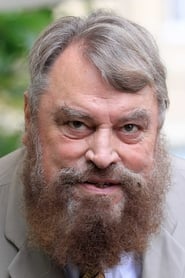 Brian Blessed
 Nick Tate
 Joanna Dunham